
What Is Should Cost Analysis? Complete Guide for Manufacturers
Most manufacturers accept supplier quotes the same way most people accept a car sticker price — without knowing what the number is actually based on. Should cost analysis changes that. It gives procurement and engineering teams an independent, data-driven estimate of what a part or product should cost to manufacture — before a single negotiation begins.
This guide covers everything you need to know: what should cost analysis is, how it works step by step, why it matters across aerospace, defence, and EV manufacturing, and how modern AI platforms are making it faster and more accurate than ever.
What Is Should Cost Analysis?
Should cost analysis is the process of estimating the true cost to manufacture a product or component from first principles — independent of what any supplier quotes. It calculates raw material cost, process time, labor, overhead, and a reasonable profit margin to arrive at a factual baseline: what this part should cost in a well-run facility.
Also referred to as should-cost modeling, cost breakdown analysis, or bottom-up cost estimation, this methodology is foundational to how mature procurement and cost engineering teams operate in high-complexity industries.
The goal is simple: eliminate information asymmetry between buyer and supplier.
Should Cost vs Actual Cost — What Is the Difference?
| Should Cost | Actual Cost | |
|---|---|---|
| What it is | Bottom-up estimate from design + process | What the supplier quotes or invoices |
| Who produces it | Buyer's engineering or procurement team | Supplier |
| Purpose | Negotiation baseline, cost control | Accounting, payment processing |
| Perspective | Independent, objective | Supplier's internal pricing logic |
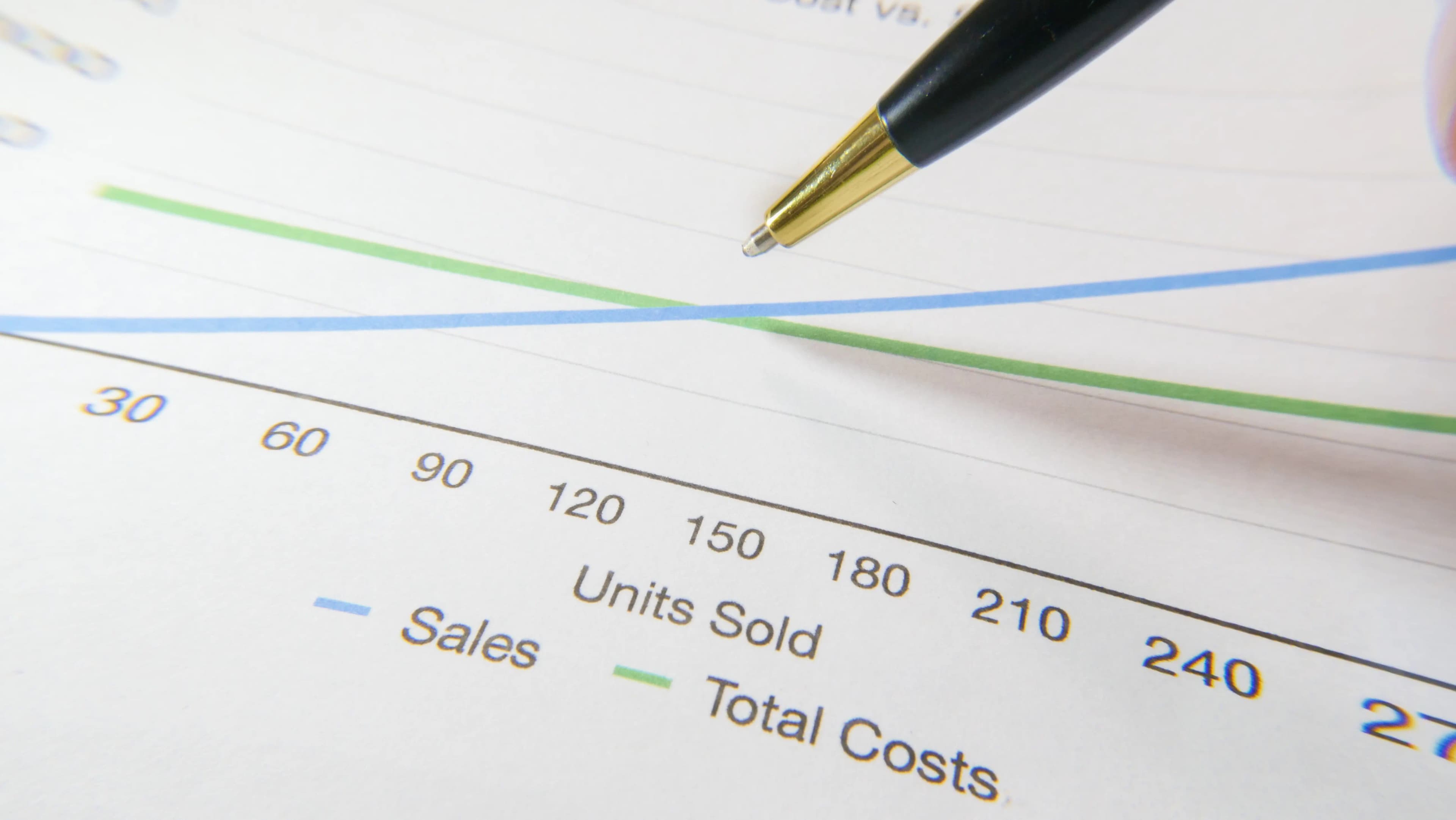
The gap between should cost and actual cost is where the real value is. A 12% delta on a precision-machined aerospace component at ₹5,000 per unit, produced at 20,000 units annually, is ₹1.2 crore in recoverable margin — every year.
How Does Should Cost Analysis Work?
A should cost model is built by decomposing a part into its manufacturing steps and applying real cost data at each stage. Here is the standard methodology:
Step 1 — Define the Part
Capture geometry, material specification, tolerance requirements, and surface finish from the engineering drawing or CAD model. These parameters drive every downstream cost calculation.
Step 2 — Identify the Manufacturing Route
Determine which processes are required — CNC machining, sheet metal forming, investment casting, injection moulding, welding, surface treatment, and so on. Each process has its own cost structure.
Step 3 — Estimate Raw Material Cost
Calculate material weight from geometry, apply appropriate scrap factors, and price using current commodity rates for the specified grade. Regional material costs vary significantly — Indian, European, and US rates can differ by 20–40%.
Step 4 — Calculate Process Time
Estimate cycle time for each manufacturing operation based on machine type, cutting parameters, and part complexity. Add setup time, inspection time, and handling.
Step 5 — Apply Labor and Machine Rates
Multiply process time by the relevant labor rate (by geography and skill level) and machine rate (by equipment type, depreciation, and utilization). This is where regional cost differences have the largest impact.
Step 6 — Add Overhead, SG&A, and Margin
Layer in factory overhead burden, general and administrative costs, and a commercially reasonable profit margin for the supplier type and geography.
Step 7 — Compare Against Supplier Quotes
Stack the should cost model against actual quotes received. Any significant gap is either a negotiation opportunity, a signal of supplier inefficiency, or an indication that your design needs engineering review.
Why Should Cost Analysis Matters in Manufacturing
Should cost analysis is not just a procurement tool — it is a strategic capability that touches design, engineering, and supply chain simultaneously.
It Shifts the Power in Negotiations
Walking into a supplier negotiation with a detailed, credible should cost model changes the conversation entirely. Rather than asking for a discount, you are presenting data and asking the supplier to explain the gap. Most won't be able to — and most will move their price.
It Enables Cost-Conscious Design
When design engineers have access to should cost feedback during the development phase, they make fundamentally different decisions. The choice between a five-axis machined titanium bracket and a welded stainless assembly is obvious on paper — but only if someone has run the numbers. Should cost analysis makes that feedback loop possible at the design stage, where the leverage is highest.
It Is the Foundation of VAVE
Value Analysis and Value Engineering (VAVE) initiatives require a credible cost baseline to measure against. Without should cost data, VAVE becomes a guess. With it, procurement and engineering teams can identify precisely which design changes or supplier switches deliver the most cost reduction — and prove it.
It Supports Make vs Buy Decisions
Should cost analysis lets manufacturers compare the cost of in-house production against outsourcing — consistently and objectively — across multiple components, geographies, and process alternatives.
It Exposes Total Cost of Sourcing
Piece price is only part of the picture. Should cost models can be extended to include tooling amortisation, logistics, import duties, quality inspection costs, and supplier risk premiums — giving a true landed cost view that simple quote comparison misses.
Industries That Rely on Should Cost Analysis
Aerospace & Defence
Cost justification is mandatory on most government and Tier 1 contracts. AS9100D-certified suppliers use should cost analysis to protect their margins while remaining competitive on complex, low-volume components.
Electric Vehicles
With intense pressure to reduce battery-pack and structural BOM costs to hit vehicle price targets, Indian and global EV OEMs run should cost models at every design gate — from concept to production release.
Drones & UAVs
High geometric complexity, tight tolerances, and small batch sizes make accurate cost modeling essential for competitive quoting and supply chain selection.
Space & Satellite
Low-volume, high-value components where an inaccurate cost estimate propagates across an entire programme. ISRO component suppliers and private space companies increasingly depend on rigorous should cost models.
Heavy Engineering & Industrial Equipment
Procurement teams use should cost to benchmark supplier performance annually, renegotiate long-running contracts, and identify which components are candidates for resourcing.
Key Components of a Should Cost Model
A reliable should cost model captures five distinct cost layers. Miss any of them and your estimate will be systematically wrong — either overstating or understating true manufacturing cost.
- Raw Material Cost — Material grade, density, stock form, scrap rate, and real-time commodity pricing with regional adjustment
- Direct Process Cost — Machining, forming, casting, or assembly time multiplied by machine rate
- Direct Labor Cost — Operator time at the appropriate regional wage rate, including benefits and overhead allocation
- Factory Overhead — Depreciation, utilities, maintenance, and floor-level management costs
- SG&A and Profit Margin — Administrative costs and a commercially fair margin for the supplier tier and geography
Common Challenges in Traditional Should Cost Analysis
Most manufacturers start their should cost journey with spreadsheets. Here is where that approach reliably breaks down:
- Time — Building a credible manual model for a complex machined part takes an experienced cost engineer 4–8 hours. Scaling that across hundreds of RFQ line items is not feasible.
- Knowledge dependency — Accurate should cost modeling requires deep understanding of multiple process families: machining, casting, sheet metal, composites, and more. Few organisations have that breadth in-house.
- Static models — When an engineer changes a tolerance or swaps a material, the spreadsheet does not update. Maintaining version control across design revisions is a significant overhead.
- Inconsistency — Two engineers building models for the same part will often produce estimates that differ by 20% or more, based on their individual assumptions and rate libraries.
- Limited benchmarking — Spreadsheets cannot easily compare a part's should cost across multiple geographies, supplier tiers, or process alternatives simultaneously.
How AI Is Transforming Should Cost Analysis
Artificial intelligence is addressing every one of these limitations. AI-powered should cost platforms now enable:
- BOM-to-cost in minutes — Upload a bill of materials and receive a should cost baseline across all line items, without manual entry or individual part modelling
- Geometry-aware costing — Import a CAD file and let the platform automatically identify process routes, estimate cycle times, and calculate costs based on actual part geometry
- Live material pricing — Real-time commodity feeds replace static lookup tables, so your models reflect current market conditions automatically
- Process routing intelligence — Machine learning models suggest optimal manufacturing routes based on geometry, volume, tolerance class, and target geography
- Continuous supplier benchmarking — Compare should cost models against actual supplier performance over time, identifying where relationships are performing and where intervention is needed
The net result: what once took a seasoned cost engineer a week can now be done in an afternoon — across an entire new product BOM.
Should Cost Analysis with Emithran
Emithran is an AI-powered manufacturing intelligence platform built specifically for aerospace, drone, defence, and EV supply chains. Our should cost analysis engine is built on real operational data from precision CNC manufacturing — not generic textbook cost factors.
What Emithran enables:
- Instant should cost models from your BOM or CAD file
- Supplier quote benchmarking against market-calibrated cost baselines
- VAVE scenario modelling to identify and prioritise cost reduction opportunities
- Procurement-ready cost justification reports
- Regional cost comparison across India, Europe, and the US
Emithran is not a generic costing spreadsheet dressed up in a UI. It is a purpose-built platform for high-stakes, high-complexity manufacturing — where the gap between should cost and actual cost is the difference between a healthy programme and a margin crisis.
Ready to stop taking supplier quotes at face value?
See how Emithran gives procurement and engineering teams the should-cost intelligence to negotiate from a position of fact.
See Emithran's Should Cost Analysis Software →Frequently asked questions
What is should cost analysis in simple terms?
Should cost analysis is a method of estimating what a manufactured part should cost to produce, based on materials, processes, labor, and overhead — independent of what any supplier quotes. It is used to benchmark supplier prices and strengthen procurement negotiations.
Who uses should cost analysis?
Cost engineers, procurement leaders, and supply chain teams in aerospace, defence, automotive, EV, and industrial manufacturing use should cost analysis as a standard practice. It is also used by finance teams evaluating make vs buy decisions.
How accurate is a should cost model?
A well-built should cost model, using calibrated process rates and current material prices, is typically accurate to within 5–10% of actual market cost. AI-powered platforms improve this further by learning continuously from supplier data.
What is the difference between should cost and target cost?
Should cost is a bottom-up estimate of what a part costs to manufacture. Target cost is a top-down figure derived from market price minus required margin. Both are used in design-to-cost and new product introduction programmes.
Is should cost analysis only relevant for large manufacturers?
No. Mid-size manufacturers — especially those with complex, outsourced supply chains — often achieve the highest return from should cost analysis, particularly during RFQ cycles, contract renewals, and new product introductions.
What is the difference between should cost analysis and cost breakdown analysis?
They are closely related. Cost breakdown analysis refers to decomposing a supplier's quote into its cost elements. Should cost analysis is a broader discipline that builds an independent cost estimate from first principles, which is then used to interpret and challenge cost breakdowns.